C a m p u s d e r R e l i g i o n e n
Tovatt Architects and Planners’ project
Sambucus restituta
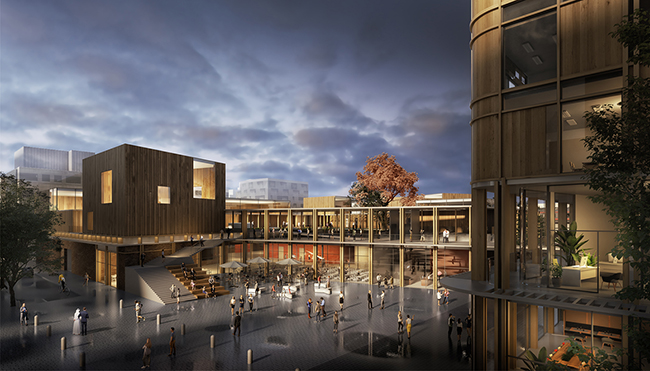
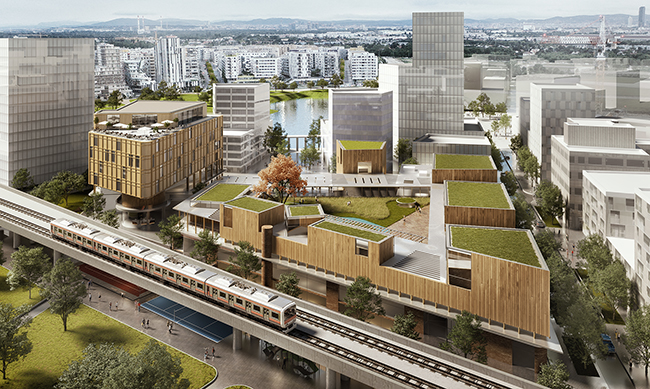
The Campus of Religions in Aspern Seestadt - an inter-religious Agora - is to give expression to the principle of "togetherness" and "learning from one another". In connection with the new building of the “Kirchlichen Padagogischen Hochschule” (KPH), an open space for pastoral care, education and comprehensive cultural exchange will be created. Likewise, it is an unparalleled project with an impact on the entire city of Vienna and far beyond, a peace project that will gain international appeal. In addition to the integration of religious, ethical and cultural aspects, this "lighthouse" will therefore also have to meet high urban planning and architectural standards.
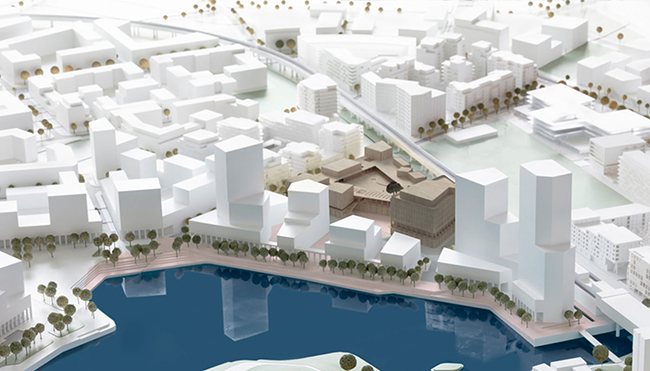
Well working urban spaces offer exciting spatial and architectural motifs, places of encounter and places of retreat. The new Campus of Religions takes up these principles and forms a new spatial sequence between the lakeside and the Elinor Ostrom park. Starting from the extension of the “Platz der Kulturen”, an independent and literally three-dimensional building arises. Set apart from the life of the ground floor, the crowded street space and the movements of the city, a backdrop of freestanding sacred buildings encloses a "Secret Garden".
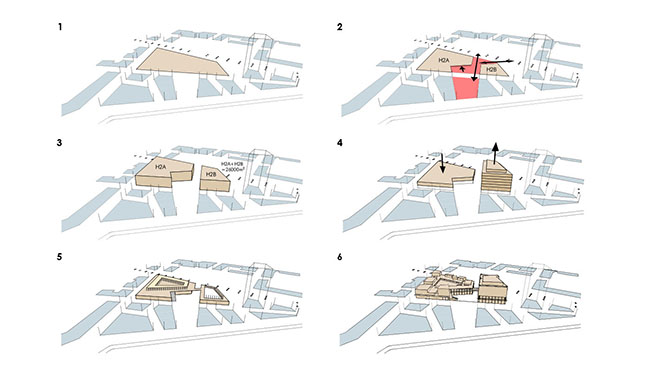
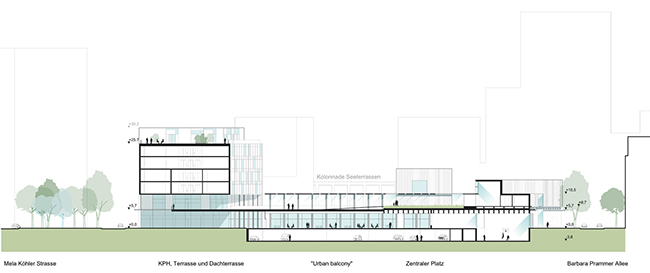
The three-dimensionality of our design offers the solution to the complex challenge of mass, clearly stated in the pre-studies and the competition brief. A radical examination of these challenges has led us to a solution in which the KPH premises literally acts as the common basis of the sacred spaces. With the present result of our analysis, the concept offers 6000m² of accessible and open space and thus clearly exceed the undersized requirements in view of the size of the building site. The ground floor plan and basement floor plan of KPH expand the Square of Religions. Open and transparent interior walls, flexible lounges and the grouping of all so-called "public" functions of the KPH, create – in metaphorical terms - an urban depth. Urban space, landscape and campus space are thus closely connected, the transitions are inviting, open and transparent. In the area of the "waist" of the KPH, at plateau level, the building structure withdraws and forms a bond of encounter and contact with the sacred buildings through the open spaces that are created. This plateau is an architectural link between science and the community of sacred buildings. The currently generic presentation of the sacred buildings is intended to show the possibility and flexibility of further design developing within the framework of further planning.
The garden of the sacred buildings will offer peace, shade and sun. The elements of water, fire, earth and air will be experienced, the elderberry tree will be connected to ground water and the wide visual relationships supported by detailing and exposed artwork.
Place: Vienna, Austria
Form: open EU wide competition entry
Role: project leader
Year: 2020